In the early summer of 2025, some friends and I went to Peru for 11 days. We saw Lima, the Inca's Sacred Valley, Machu Picchu, and Lake Titicaca. It was a great time and it was cool to see the remains from the pre-Columbian civilizations.
Lima, Day 2: June 12, 2025
We flew down on the 11th, which I didn't take any pictures of since we arrived after dark and went straight to the hotel. On the 12th we started in the capital city.
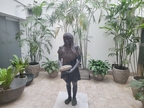 20250612_071830.jpg
A statue near the lobby of the hotel. I can't find anything about it online.
20250612_071830.jpg
A statue near the lobby of the hotel. I can't find anything about it online.
 20250612_072714.jpg
A bull sculpture in June 7th Park, near the hotel.
20250612_072714.jpg
A bull sculpture in June 7th Park, near the hotel.
 20250612_072913.jpg
And a giant ceramic pot.
20250612_072913.jpg
And a giant ceramic pot.
 20250612_073208.jpg
The Parroquia La Virgen Milagrosa between June 7th Park and John F. Kennedy Park.
20250612_073208.jpg
The Parroquia La Virgen Milagrosa between June 7th Park and John F. Kennedy Park.
 20250612_073333.jpg
Sign describing why JFK Park was named the way it was. He was "considered an icon of the aspirations and hopes of Americans."
20250612_073333.jpg
Sign describing why JFK Park was named the way it was. He was "considered an icon of the aspirations and hopes of Americans."
 20250612_090851.jpg
A pre-Inca stone mound in Miraflores called Huaca Pucllana, built by the Lima people some time between 200 and 700 CE.
20250612_090851.jpg
A pre-Inca stone mound in Miraflores called Huaca Pucllana, built by the Lima people some time between 200 and 700 CE.
 20250612_090911.jpg
Still more. You can see where some of the exterior bricks were removed over the years before the site was protected.
20250612_090911.jpg
Still more. You can see where some of the exterior bricks were removed over the years before the site was protected.
 20250612_100049.jpg
Part of the Basílica y Convento de San Francisco de Lima, where we went to see the catacombs.
20250612_100049.jpg
Part of the Basílica y Convento de San Francisco de Lima, where we went to see the catacombs.
 20250612_100204.jpg
The main entrance to the building.
20250612_100204.jpg
The main entrance to the building.
 20250612_105350.jpg
Skipping ahead because no photography was allowed inside. This is a fountain in the square in front of the presidential palace.
20250612_105350.jpg
Skipping ahead because no photography was allowed inside. This is a fountain in the square in front of the presidential palace.
 20250612_110203.jpg
The Basílica Catedral de Lima. The smaller part here is popular for weddings -- it's cheaper.
20250612_110203.jpg
The Basílica Catedral de Lima. The smaller part here is popular for weddings -- it's cheaper.
 20250612_110215.jpg
The presidential palace.
20250612_110215.jpg
The presidential palace.
 20250612_110631.jpg
A basaltic stone from the Andes: a tribute to the last Inca ruler, Taulichusco.
20250612_110631.jpg
A basaltic stone from the Andes: a tribute to the last Inca ruler, Taulichusco.
 20250612_110654.jpg
This is (not) a statue of Francisco Pizarro.
20250612_110654.jpg
This is (not) a statue of Francisco Pizarro.
 20250612_112058.jpg
The Convento Máximo de Nuestra Señora del Rosario.
20250612_112058.jpg
The Convento Máximo de Nuestra Señora del Rosario.
 20250612_121825.jpg
After that we went to the Museo Larco, which has a bunch of historical artifacts. Here are some arrowheads.
20250612_121825.jpg
After that we went to the Museo Larco, which has a bunch of historical artifacts. Here are some arrowheads.
 20250612_121836.jpg
Pottery.
20250612_121836.jpg
Pottery.
 20250612_122420.jpg
The same guy, at three stages of his life.
20250612_122420.jpg
The same guy, at three stages of his life.
 20250612_123308.jpg
Animals. The cat was associated with the mortal world.
20250612_123308.jpg
Animals. The cat was associated with the mortal world.
 20250612_123459.jpg
I think this was the representation of a god, but I can't remember.
20250612_123459.jpg
I think this was the representation of a god, but I can't remember.
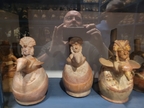 20250612_123619.jpg
I think this is the same god, this time riding a bird. Maybe a condor? Those were associated with the realm of the gods. Also, the reflection of a doofus holding a phone.
20250612_123619.jpg
I think this is the same god, this time riding a bird. Maybe a condor? Those were associated with the realm of the gods. Also, the reflection of a doofus holding a phone.
 20250612_123710.jpg
Warning: Danger Noodle. Snakes were associated with the underworld/realm of the dead.
20250612_123710.jpg
Warning: Danger Noodle. Snakes were associated with the underworld/realm of the dead.
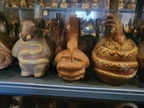 20250612_123828.jpg
Condors and snakes.
20250612_123828.jpg
Condors and snakes.
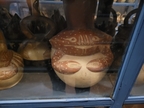 20250612_123917.jpg
A crab.
20250612_123917.jpg
A crab.
 20250612_125347.jpg
This was showing a family; grandma weaving, the kid learning, and Dad yelling that the kid is doing it wrong.
20250612_125347.jpg
This was showing a family; grandma weaving, the kid learning, and Dad yelling that the kid is doing it wrong.
 20250612_130005.jpg
A ceremonial knife used to slit the sacrifice's throat, and the cup used to collect the blood.
20250612_130005.jpg
A ceremonial knife used to slit the sacrifice's throat, and the cup used to collect the blood.
 20250612_131056.jpg
More decorative items for the elite. This time from a Chimu's funeral.
20250612_131056.jpg
More decorative items for the elite. This time from a Chimu's funeral.
 20250612_151219.jpg
We went to lunch at a mall overlooking the Pacific, after we ate we walked around a bit. This is looking down at the coast and the Carretera Panamericana Sur (Pan-South-American Highway) that runs the length of the Peruvian coast.
20250612_151219.jpg
We went to lunch at a mall overlooking the Pacific, after we ate we walked around a bit. This is looking down at the coast and the Carretera Panamericana Sur (Pan-South-American Highway) that runs the length of the Peruvian coast.
This kicked off a pattern that more or less held for the whole trip: Travel a day, explore a day.
From Lima to Cusco, Day 3: June 13, 2025
The next day we flew to Cusco then drove to our hotel. We were supposed to see a demonstration of weaving in Chinchero, but our flight was delayed so the weaving had to get pushed to the next day.
Not much that day, we spent several hours sitting at the airport.
The Sacred Valley, Day 4: June 14, 2025
This was when things really got going. We visited two Inca sites and made up the weaving we were supposed to see the day before.
 20250614_100406.jpg
At the Pisaq site and looking down at the modern town of Pisac.
20250614_100406.jpg
At the Pisaq site and looking down at the modern town of Pisac.
 20250614_101605.jpg
Looking at the top of the hill, we see some of the farming terraces with warehouses for the crops at the top.
20250614_101605.jpg
Looking at the top of the hill, we see some of the farming terraces with warehouses for the crops at the top.
 20250614_102936.jpg
Some scenery from the top of the terraces.
20250614_102936.jpg
Some scenery from the top of the terraces.
 20250614_103110.jpg
Alpacas.
20250614_103110.jpg
Alpacas.
 20250614_103927.jpg
A little bridge over a stream near the end of the site, with the warehouses in the background.
20250614_103927.jpg
A little bridge over a stream near the end of the site, with the warehouses in the background.
 20250614_104407.jpg
Heading back, baby alpaca.
20250614_104407.jpg
Heading back, baby alpaca.
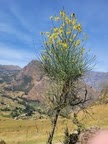 20250614_104827.jpg
Our guide told us what this was. I forgot. But you can see we're up high enough that larger trees don't really like to grow. We're at something like 11,300 feet above sea level here.
20250614_104827.jpg
Our guide told us what this was. I forgot. But you can see we're up high enough that larger trees don't really like to grow. We're at something like 11,300 feet above sea level here.
 20250614_105500.jpg
At the watchtower in the corner of the site, where they could look down the valley.
20250614_105500.jpg
At the watchtower in the corner of the site, where they could look down the valley.
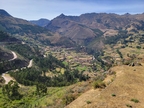 20250614_105505.jpg
They valley again.
20250614_105505.jpg
They valley again.
 20250614_105523.jpg
Inside the watchtower.
20250614_105523.jpg
Inside the watchtower.
 20250614_105544.jpg
It was a decently-sized thing; the guards stayed there since there was just farmland here.
20250614_105544.jpg
It was a decently-sized thing; the guards stayed there since there was just farmland here.
 20250614_105600.jpg
More of the remaining structures.
20250614_105600.jpg
More of the remaining structures.
 20250614_105626.jpg
The farthest-forward structure.
20250614_105626.jpg
The farthest-forward structure.
 20250614_105713.jpg
Nooks the Inca built to help the building flex during tremors.
20250614_105713.jpg
Nooks the Inca built to help the building flex during tremors.
 20250614_110109.jpg
Looking down from near the top of the watch complex, selfie time.
20250614_110109.jpg
Looking down from near the top of the watch complex, selfie time.
 20250614_113022.jpg
After we were done we heading back down into the village of Pisac to see a family-owned jewelry store where they use local materials including silver and various stones. That wasn't really my thing, so I poked my head outside and a local stuffed a baby alpaca into my hands to take a picture.
20250614_113022.jpg
After we were done we heading back down into the village of Pisac to see a family-owned jewelry store where they use local materials including silver and various stones. That wasn't really my thing, so I poked my head outside and a local stuffed a baby alpaca into my hands to take a picture.
 20250614_145449.jpg
Next stop: Ollantaytambo, a defensive placement where two valleys come together.
20250614_145449.jpg
Next stop: Ollantaytambo, a defensive placement where two valleys come together.
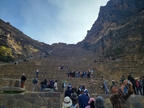 20250614_150227.jpg
"Countless stairs," redux.
20250614_150227.jpg
"Countless stairs," redux.
 20250614_150403.jpg
Next to the warehouses, there's an angry-face-looking thing. The Inca didn't carve that, they just thought it was fortuitous.
20250614_150403.jpg
Next to the warehouses, there's an angry-face-looking thing. The Inca didn't carve that, they just thought it was fortuitous.
 20250614_150852.jpg
Climbed up a bit, looking at the town. The train station we'd be at the next day is out of frame to the right.
20250614_150852.jpg
Climbed up a bit, looking at the town. The train station we'd be at the next day is out of frame to the right.
 20250614_151119.jpg
Inca steps. Every day was leg day.
20250614_151119.jpg
Inca steps. Every day was leg day.
 20250614_151454.jpg
Farther up, looking at the town again.
20250614_151454.jpg
Farther up, looking at the town again.
 20250614_151505.jpg
And the angry face.
20250614_151505.jpg
And the angry face.
 20250614_152052.jpg
Another view of the town.
20250614_152052.jpg
Another view of the town.
 20250614_152055.jpg
We were standing on a little complex off to the side where the Inca built a temple.
20250614_152055.jpg
We were standing on a little complex off to the side where the Inca built a temple.
 20250614_152130.jpg
We know this was an important part because instead of using random stones and holding them together with mortar, they chiseled the rocks to fit together without any filler. They also shaped protrusions and holes into the stones, like giant Legos.
20250614_152130.jpg
We know this was an important part because instead of using random stones and holding them together with mortar, they chiseled the rocks to fit together without any filler. They also shaped protrusions and holes into the stones, like giant Legos.
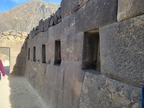 20250614_152208.jpg
More windows and nooks.
20250614_152208.jpg
More windows and nooks.
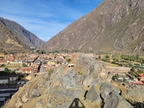 20250614_152251.jpg
This was about as high up as we went, looking now at a part that predates the Inca.
20250614_152251.jpg
This was about as high up as we went, looking now at a part that predates the Inca.
 20250614_152818.jpg
A better example of how the stones were made to fit together for the temple.
20250614_152818.jpg
A better example of how the stones were made to fit together for the temple.
 20250614_153410.jpg
Looking along the side terrace. You can see the "Pre-Inca Section" sign from before.
20250614_153410.jpg
Looking along the side terrace. You can see the "Pre-Inca Section" sign from before.
 20250614_170509.jpg
In Chinchero, where they demonstrated traditional spinning and weaving with alpaca wool. This step was cleaning.
20250614_170509.jpg
In Chinchero, where they demonstrated traditional spinning and weaving with alpaca wool. This step was cleaning.
 20250614_170740.jpg
And after pulling, spinning. Then we looked around and bought stuff.
20250614_170740.jpg
And after pulling, spinning. Then we looked around and bought stuff.
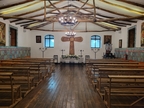 20250614_185746.jpg
We headed back to the hotel, and while walking around I decided to take pictures of the little on-site church.
20250614_185746.jpg
We headed back to the hotel, and while walking around I decided to take pictures of the little on-site church.
 20250614_185754.jpg
Along the walls.
20250614_185754.jpg
Along the walls.
 20250614_185802.jpg
And the other wall.
20250614_185802.jpg
And the other wall.
Machu Picchu, Day 5: June 15, 2025
And on to the main attraction: Machu Picchu. There are several ways to get there: Our initial plan included hiking, that was scrapped in favor of taking the train from Ollantaytambo (where we'd seen the Inca defensive site the day before).
 20250615_061715.jpg
The next day, up early to drive back to Ollantaytambo to catch the train to Machu Picchu. There's a nice little fountain outside the church.
20250615_061715.jpg
The next day, up early to drive back to Ollantaytambo to catch the train to Machu Picchu. There's a nice little fountain outside the church.
 20250615_061730.jpg
And the church itself.
20250615_061730.jpg
And the church itself.
 20250615_080930.jpg
The Urumamba river out the train window.
20250615_080930.jpg
The Urumamba river out the train window.
 20250615_083655.jpg
Looking back down the tracks.
20250615_083655.jpg
Looking back down the tracks.
 20250615_090410.jpg
Hikers, if you zoom in far enough to see them.
20250615_090410.jpg
Hikers, if you zoom in far enough to see them.
 20250615_095725.jpg
The tracks follow the river to Aguas Calientes, the town near Machu Picchu. There's another river, the Aguas Calientes, that cuts the town in two. Train station on one side, all the hotels on the other. Footbridges like this one cross it.
20250615_095725.jpg
The tracks follow the river to Aguas Calientes, the town near Machu Picchu. There's another river, the Aguas Calientes, that cuts the town in two. Train station on one side, all the hotels on the other. Footbridges like this one cross it.
 20250615_100231.jpg
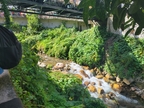
The Aguas Calientes River.
20250615_100231.jpg
The Aguas Calientes River.
 20250615_111201.jpg
We've made it to Machu Picchu and started doing some climbing.
20250615_111201.jpg
We've made it to Machu Picchu and started doing some climbing.
 20250615_111457.jpg
The elevation here is lower; we're in the rainforest instead of above it, so it wasn't as hard to keep my breath.
20250615_111457.jpg
The elevation here is lower; we're in the rainforest instead of above it, so it wasn't as hard to keep my breath.
 20250615_111500.jpg
Looking into the main part of the site.
20250615_111500.jpg
Looking into the main part of the site.
 20250615_111617.jpg
Still more climbing to do, as seen at left.
20250615_111617.jpg
Still more climbing to do, as seen at left.
 20250615_111744.jpg
Up a little farther, looking down.
20250615_111744.jpg
Up a little farther, looking down.
 20250615_111955.jpg
You can't prove you were there without taking a selfie, right?
20250615_111955.jpg
You can't prove you were there without taking a selfie, right?
 20250615_112520.jpg
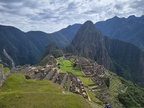
The money shot. The path we'd take down is to the left.
20250615_112520.jpg
The money shot. The path we'd take down is to the left.
 20250615_113954.jpg
This is where we started moving over to head into the site. There's some houses and a small temple on our way in.
20250615_113954.jpg
This is where we started moving over to head into the site. There's some houses and a small temple on our way in.
 20250615_114035.jpg
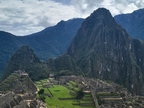
The site with more of the mountain it sits on.
20250615_114035.jpg
The site with more of the mountain it sits on.
 20250615_114629.jpg
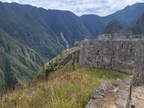
Some terraces on the side of the hill, if I remember right those were defensive in nature and weren't used for farming.
20250615_114629.jpg
Some terraces on the side of the hill, if I remember right those were defensive in nature and weren't used for farming.
 20250615_115152.jpg
Looking into one of the houses. This was built for common use, it's irregular stones and mortar instead of the chiseled-to-fit stones like we saw in the temple at Ollataytambo.
20250615_115152.jpg
Looking into one of the houses. This was built for common use, it's irregular stones and mortar instead of the chiseled-to-fit stones like we saw in the temple at Ollataytambo.
 20250615_115252.jpg
One of the locals having a siesta.
20250615_115252.jpg
One of the locals having a siesta.
 20250615_115403.jpg
More houses.
20250615_115403.jpg
More houses.
 20250615_115457.jpg
Looking up the street.
20250615_115457.jpg
Looking up the street.
 20250615_115935.jpg
The round bit was a temple, you can tell from the custom-fit stones.
20250615_115935.jpg
The round bit was a temple, you can tell from the custom-fit stones.
 20250615_120221.jpg
And the site now that we're past the houses.
20250615_120221.jpg
And the site now that we're past the houses.
 20250615_120705.jpg
And coming back around to more side terraces we saw before.
20250615_120705.jpg
And coming back around to more side terraces we saw before.
 20250615_121044.jpg
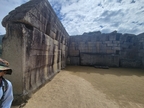
Part of a temple area in the main site.
20250615_121044.jpg
Part of a temple area in the main site.
 20250615_121344.jpg
Looking down an alleyway next to the temple.
20250615_121344.jpg
Looking down an alleyway next to the temple.
 20250615_121454.jpg
More temple stuff. I think these windows were aligned for one of the solstices.
20250615_121454.jpg
More temple stuff. I think these windows were aligned for one of the solstices.
 20250615_121458.jpg
Looking out the window.
20250615_121458.jpg
Looking out the window.
 20250615_121644.jpg
The big grassy area in the middle of the site.
20250615_121644.jpg
The big grassy area in the middle of the site.
 20250615_122144.jpg
At the far end of the "lawn", checking out some llamas.
20250615_122144.jpg
At the far end of the "lawn", checking out some llamas.
 20250615_122916.jpg
More of the mountains.
20250615_122916.jpg
More of the mountains.
 20250615_123524.jpg
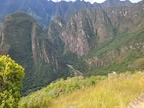
There was some kind of mining in the valley if I remember right (I probably don't).
20250615_123524.jpg
There was some kind of mining in the valley if I remember right (I probably don't).
 20250615_123703.jpg
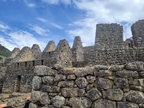
The buildings we saw earlier, this time from below.
20250615_123703.jpg
The buildings we saw earlier, this time from below.
 20250615_124336.jpg
Pretty sure the thing in the middle was astronomy-related.
20250615_124336.jpg
Pretty sure the thing in the middle was astronomy-related.
 20250615_124504.jpg
Another look at the starting terraces. It was a pretty good climb up.
20250615_124504.jpg
Another look at the starting terraces. It was a pretty good climb up.
After that we ate lunch at the restaurant at the welcome center and went back to town just in time for it to start raining.
Aguas Calientes, Day 6: June 16, 2025
This was a "free day to explore", which ended up being kind of a waste due to it pissing down rain most of the day. The town itself is basically all restaurants and shops selling cheap tourist shit -- our itinerary recommended a hiking trail but with it raining and us only having sneakers, that was ruled out.
Aguas Calientes to Cusco, Day 7: June 17, 2025
From there we moved on to the Inca capital of Cusco.
Cusco, Day 8: June 18, 2025
Another day of exploring the city; we hit a couple of Inca sites and a Catholic church that was built on an Inca temple. And we petted some llamas.
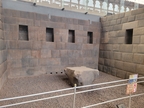 20250618_091739.jpg
Checking out the city. This was in a church that was built on top of an Inca temple, the Temple of Koricancha. This room has... an altar? in it.
20250618_091739.jpg
Checking out the city. This was in a church that was built on top of an Inca temple, the Temple of Koricancha. This room has... an altar? in it.
 20250618_092511.jpg
A model of the structure, the rooms we were looking at are the two beside each other at the bottom left.
20250618_092511.jpg
A model of the structure, the rooms we were looking at are the two beside each other at the bottom left.
 20250618_092518.jpg
Terraces outside the complex, we'll see them in a few minutes.
20250618_092518.jpg
Terraces outside the complex, we'll see them in a few minutes.
 20250618_093011.jpg
On top of the Inca temple was still a Catholic church. This is their painting of the Virgin Mary, who was merged with the Mother Earth concept of Pachamama, which is why her dress is triangular like a mountain.
20250618_093011.jpg
On top of the Inca temple was still a Catholic church. This is their painting of the Virgin Mary, who was merged with the Mother Earth concept of Pachamama, which is why her dress is triangular like a mountain.
 20250618_094022.jpg
Outside, these are the terraces from the model. In the middle are the condor, puma and snake.
20250618_094022.jpg
Outside, these are the terraces from the model. In the middle are the condor, puma and snake.
 20250618_094027.jpg
Part of the temple wall that still exists.
20250618_094027.jpg
Part of the temple wall that still exists.
 20250618_094030.jpg
Looking at the church building.
20250618_094030.jpg
Looking at the church building.
 20250618_094058.jpg
Zoomed out a bit.
20250618_094058.jpg
Zoomed out a bit.
 20250618_100212.jpg
All the windows of those first rooms are perfectly aligned.
20250618_100212.jpg
All the windows of those first rooms are perfectly aligned.
 20250618_103334.jpg
After that we went to an old fortification in the hills above Cusco called Saqsaywaman.
20250618_103334.jpg
After that we went to an old fortification in the hills above Cusco called Saqsaywaman.
 20250618_103837.jpg
It's another important site with the custom-carved rocks. The big stone is notable for the number of sides it has carved into it.
20250618_103837.jpg
It's another important site with the custom-carved rocks. The big stone is notable for the number of sides it has carved into it.
 20250618_105055.jpg
I forget what the mound across the field was for.
20250618_105055.jpg
I forget what the mound across the field was for.
 20250618_105718.jpg
Closer to the top, looking out over Cusco.
20250618_105718.jpg
Closer to the top, looking out over Cusco.
 20250618_105727.jpg
It's grown a bit over the last half a millennium.
20250618_105727.jpg
It's grown a bit over the last half a millennium.
 20250618_105736.jpg
At the top of the site, the foundation for a grain silo.
20250618_105736.jpg
At the top of the site, the foundation for a grain silo.
 20250618_112545.jpg
The remains of a gate.
20250618_112545.jpg
The remains of a gate.
 20250618_112635.jpg
Selfie.
20250618_112635.jpg
Selfie.
 20250618_115346.jpg
After that we went to an animal sanctuary nearby (Manos de la Comunidad) to see some llamas.
20250618_115346.jpg
After that we went to an animal sanctuary nearby (Manos de la Comunidad) to see some llamas.
 20250618_120151.jpg
Dude holding some corn.
20250618_120151.jpg
Dude holding some corn.
 20250618_120618.jpg
More llamas.
20250618_120618.jpg
More llamas.
 20250618_120713.jpg
A model of Machu Picchu. The terraces we climbed are on the left.
20250618_120713.jpg
A model of Machu Picchu. The terraces we climbed are on the left.
 20250618_120729.jpg
Condor. They're pretty big.
20250618_120729.jpg
Condor. They're pretty big.
 20250618_120758.jpg
They also have quite the wingspan.
20250618_120758.jpg
They also have quite the wingspan.
 20250618_120906.jpg
There we go; the full wingspan.
20250618_120906.jpg
There we go; the full wingspan.
 20250618_120908.jpg
Again.
20250618_120908.jpg
Again.
 20250618_121013.jpg
The other one decided to get in on the act.
20250618_121013.jpg
The other one decided to get in on the act.
 20250618_121231.jpg
They have bulls. They're kind of a good luck charm.
20250618_121231.jpg
They have bulls. They're kind of a good luck charm.
 20250618_121247.jpg
A model of the big church we'd been in that morning.
20250618_121247.jpg
A model of the big church we'd been in that morning.
 20250618_121614.jpg
They also have a showroom with things from the pre-Columbian peoples of the area.
20250618_121614.jpg
They also have a showroom with things from the pre-Columbian peoples of the area.
 20250618_121620.jpg
Pretty neat stuff.
20250618_121620.jpg
Pretty neat stuff.
 20250618_121637.jpg
This was from a non-Inca civilization called the Paracas.
20250618_121637.jpg
This was from a non-Inca civilization called the Paracas.
 20250618_121658.jpg
Similar, from the Huari.
20250618_121658.jpg
Similar, from the Huari.
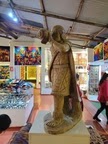 20250618_121714.jpg
Dude blowing a conch shell. It was how they communicated over longer distances back in the day.
20250618_121714.jpg
Dude blowing a conch shell. It was how they communicated over longer distances back in the day.
 20250618_121721.jpg
More weaving, from the Chancay.
20250618_121721.jpg
More weaving, from the Chancay.
 20250618_121739.jpg
This one was Inca.
20250618_121739.jpg
This one was Inca.
 20250618_123724.jpg
Some more weaving, and you can see the "trinity" of the condor, puma and snake.
20250618_123724.jpg
Some more weaving, and you can see the "trinity" of the condor, puma and snake.
 20250618_130040.jpg
Next we went up the road to a site called Q'enqo.
20250618_130040.jpg
Next we went up the road to a site called Q'enqo.
 20250618_130619.jpg
A table inside a carved-out room. They think it was used for either sacrifices or mummification. The window/hole was used to direct light into the room.
20250618_130619.jpg
A table inside a carved-out room. They think it was used for either sacrifices or mummification. The window/hole was used to direct light into the room.
 20250618_131026.jpg
Back outside and looking at Cusco between the hills.
20250618_131026.jpg
Back outside and looking at Cusco between the hills.
 20250618_151225.jpg
After finishing up for the day we headed out for some chifa (Chinese food) for lunch, then headed over to the main square. Ideally we would have toured the cathedral in the background here -- the Coro Matrimonios Catedral del Cusco -- but due to the festival the tour wasn't available. So we just checked out what was going on.
20250618_151225.jpg
After finishing up for the day we headed out for some chifa (Chinese food) for lunch, then headed over to the main square. Ideally we would have toured the cathedral in the background here -- the Coro Matrimonios Catedral del Cusco -- but due to the festival the tour wasn't available. So we just checked out what was going on.
 20250618_151916.jpg
Part of a little parade that was going on, with a person re-enacting the (not-)Pizarro statue, maybe? The church in the background is a different one next to where we entered the square, it's the Iglesia de la Companía de Jesús.
20250618_151916.jpg
Part of a little parade that was going on, with a person re-enacting the (not-)Pizarro statue, maybe? The church in the background is a different one next to where we entered the square, it's the Iglesia de la Companía de Jesús.
 20250618_152331.jpg
Then they turned and headed into the cathedral.
20250618_152331.jpg
Then they turned and headed into the cathedral.
 20250618_152539.jpg
The flag here is typically used to represent the Inca, they didn't have their own flag. The rainbow was an important part of their religion.
20250618_152539.jpg
The flag here is typically used to represent the Inca, they didn't have their own flag. The rainbow was an important part of their religion.
 20250618_155950.jpg
The cathedral again.
20250618_155950.jpg
The cathedral again.
 20250618_163709.jpg
They have a soda in Peru called Inca Kola, which is mostly bubblegum-flavored with a little citrus. It's pretty good. Luckily for me there's a diet version ("sin azúcar" means "without sugar").
20250618_163709.jpg
They have a soda in Peru called Inca Kola, which is mostly bubblegum-flavored with a little citrus. It's pretty good. Luckily for me there's a diet version ("sin azúcar" means "without sugar").
The festival was neat, even though I have no idea what it was for. But since it was happening at the cathedral we were supposed to take a tour of we wound up not being able to do that part. Ah well.
Tour Bus to Puno, Day 9: June 19, 2025
Peru isn't a small country: We took the bus to the next province over (Puno) heading to the main city along Lake Titicaca (also called Puno). Including tourist stops, since it was a tour bus and not like a Peruvian Greyhound, took around ten hours.
 20250619_073608.jpg
Not too long after we started our trip, we stopped briefly in Oropesa -- the "bread capital of Peru". This is a loaf of chuta bread. We each got a little sample. I liked it.
20250619_073608.jpg
Not too long after we started our trip, we stopped briefly in Oropesa -- the "bread capital of Peru". This is a loaf of chuta bread. We each got a little sample. I liked it.
 20250619_080003.jpg
The next stop was at the San Pedro Apóstol de Andahuaylillas.
20250619_080003.jpg
The next stop was at the San Pedro Apóstol de Andahuaylillas.
 20250619_080124.jpg
There was a very old tree outside. No photography allowed indoors, so that's it until the next stop. But they do have a web site where you can see some pictures of the inside.
20250619_080124.jpg
There was a very old tree outside. No photography allowed indoors, so that's it until the next stop. But they do have a web site where you can see some pictures of the inside.
 20250619_102117.jpg
Our next stop was a little farther away, at the Raqch'i archaeological site. Walking around in the colcas -- grain storage buildings.
20250619_102117.jpg
Our next stop was a little farther away, at the Raqch'i archaeological site. Walking around in the colcas -- grain storage buildings.
 20250619_102147.jpg
A closer look at one.
20250619_102147.jpg
A closer look at one.
 20250619_103354.jpg
And one in the back that had been reconstructed.
20250619_103354.jpg
And one in the back that had been reconstructed.
 20250619_103613.jpg
Moving into the town area this was one of the larger buildings.
20250619_103613.jpg
Moving into the town area this was one of the larger buildings.
 20250619_104343.jpg
The temple of Wiracocha. The big wall was the load-bearing wall that ran along the length. Due to its size (and weight) it was only built with stone at the bottom and then with mud brick for the rest of its height.
20250619_104343.jpg
The temple of Wiracocha. The big wall was the load-bearing wall that ran along the length. Due to its size (and weight) it was only built with stone at the bottom and then with mud brick for the rest of its height.
 20250619_104632.jpg
We walked along the length then around to the other side. The round structures here were foundations for pillars holding up the roof.
20250619_104632.jpg
We walked along the length then around to the other side. The round structures here were foundations for pillars holding up the roof.
 20250619_104729.jpg
A look at the interior wall, with the notches for the ceiling beams.
20250619_104729.jpg
A look at the interior wall, with the notches for the ceiling beams.
 20250619_105627.jpg
Walking back to the bus and getting a pic of the defensive wall behind some of the buildings. This is quite a ways away, the guide said it's a few meters tall to be seen from this distance.
20250619_105627.jpg
Walking back to the bus and getting a pic of the defensive wall behind some of the buildings. This is quite a ways away, the guide said it's a few meters tall to be seen from this distance.
 20250619_105859.jpg
The restored colca.
20250619_105859.jpg
The restored colca.
 20250619_110232.jpg
Inca steps as we were walking back.
20250619_110232.jpg
Inca steps as we were walking back.
 20250619_110359_02.jpg
A statue of Wiracocha.
20250619_110359_02.jpg
A statue of Wiracocha.
 20250619_121041.jpg
Just up the road we stopped for lunch. This waterfall (on the Urubamba River?) was behind the restaurant.
20250619_121041.jpg
Just up the road we stopped for lunch. This waterfall (on the Urubamba River?) was behind the restaurant.
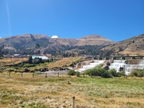 20250619_121051.jpg
And of course some mountains.
20250619_121051.jpg
And of course some mountains.
 20250619_121121.jpg
This little building was there too. It looks a bit like a tiny old church, but it just had some horses standing beside it.
20250619_121121.jpg
This little building was there too. It looks a bit like a tiny old church, but it just had some horses standing beside it.
 20250619_130653.jpg
We got out at the highest point along the road, 4,335 meters (14,222 feet, about 100 feet higher than the summit of Pike's Peak) above sea level. As you can see from the sign the mountain we're looking at is much higher.
20250619_130653.jpg
We got out at the highest point along the road, 4,335 meters (14,222 feet, about 100 feet higher than the summit of Pike's Peak) above sea level. As you can see from the sign the mountain we're looking at is much higher.
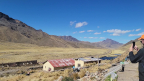 20250619_130802.mp4
Taking a video of it.
20250619_130802.mp4
Taking a video of it.
 20250619_130844.jpg
Selfie with the mountain.
20250619_130844.jpg
Selfie with the mountain.
 20250619_143957.jpg
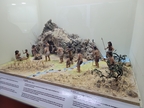
Moving along again, at our last stop before reaching Puno, the Museo Arqueologico de Pucara. Here's a diorama of the original inhabitants about 12,000 years ago.
20250619_143957.jpg
Moving along again, at our last stop before reaching Puno, the Museo Arqueologico de Pucara. Here's a diorama of the original inhabitants about 12,000 years ago.
 20250619_144112.jpg
Paintings from between 10,000 BCE and 3,600 BCE.
20250619_144112.jpg
Paintings from between 10,000 BCE and 3,600 BCE.
 20250619_144233.jpg
Another diorama from the (likely) beginnings of human habitation of South America, this time showing the start of farming.
20250619_144233.jpg
Another diorama from the (likely) beginnings of human habitation of South America, this time showing the start of farming.
 20250619_144253.jpg
A piece from the Qaluyo culture, about 3200 years ago.
20250619_144253.jpg
A piece from the Qaluyo culture, about 3200 years ago.
 20250619_144359.jpg
Humanoid figures.
20250619_144359.jpg
Humanoid figures.
 20250619_144725.jpg
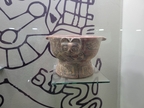
Puma.
20250619_144725.jpg
Puma.
 20250619_144729.jpg
Another puma.
20250619_144729.jpg
Another puma.
 20250619_144832.jpg
I forget what this was for, I didn't take a picture of anything that described it.
20250619_144832.jpg
I forget what this was for, I didn't take a picture of anything that described it.
 20250619_144853.jpg
More pottery, this from the Tiahuanaco culture, between 600 and 1100 CE.
20250619_144853.jpg
More pottery, this from the Tiahuanaco culture, between 600 and 1100 CE.
 20250619_145015.jpg
And a statue, holding a person's head.
20250619_145015.jpg
And a statue, holding a person's head.
 20250619_145220.jpg
A real Inca mummy. They were wrapped up in the fetal position, waiting to be reborn into the realm of the dead.
20250619_145220.jpg
A real Inca mummy. They were wrapped up in the fetal position, waiting to be reborn into the realm of the dead.
 20250619_145241.jpg
Funerary items, including the chullpa -- the little brick tower -- from just before the Spaniards arrived. The climate wasn't as dry in that location so the person wasn't mummified and decomposed instead.
20250619_145241.jpg
Funerary items, including the chullpa -- the little brick tower -- from just before the Spaniards arrived. The climate wasn't as dry in that location so the person wasn't mummified and decomposed instead.
 20250619_145410.jpg
Lucky bulls.
20250619_145410.jpg
Lucky bulls.
 20250619_145419.jpg
More bull.
20250619_145419.jpg
More bull.
 20250619_193308.jpg
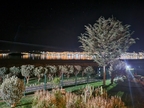
After that we made our way through Juliaca without stopping, then the last hour or so to Puno. This was from the hotel patio, looking at downtown over Lake Titicaca.
20250619_193308.jpg
After that we made our way through Juliaca without stopping, then the last hour or so to Puno. This was from the hotel patio, looking at downtown over Lake Titicaca.
And with that we'd made it to our last stop, the Great Cornholio's favorite geographical feature.
Lake Titicaca, Day 10: June 20, 2025
While it's not even as large as the smallest of the Great Lakes, Titicaca is notable for being the highest navigable lake in the world. We spent the day visiting the floating "islands" of Uros, then went on to the actual-island of Taquile. In both places we met Indigenous populations that predated the Incas' arrival.
 20250620_060733.jpg
I took the same shot the next morning. And yes I actually planned it that way.
20250620_060733.jpg
I took the same shot the next morning. And yes I actually planned it that way.
 20250620_060741.jpg
Our hotel had its own pier into the lake. Due to climate change the level of the lake has overall dropped the last 10-20 years, so the pier only barely makes it to the water now. In the foreground are some railroad tracks with a gate you had to buzz through to get to the pier. Part of me wanted to go out and take a picture, most of me couldn't be bothered.
20250620_060741.jpg
Our hotel had its own pier into the lake. Due to climate change the level of the lake has overall dropped the last 10-20 years, so the pier only barely makes it to the water now. In the foreground are some railroad tracks with a gate you had to buzz through to get to the pier. Part of me wanted to go out and take a picture, most of me couldn't be bothered.
 20250620_081601.jpg
After breakfast we took a tour boat out onto the lake. The part of the lake near Puno is pretty shallow and reeds grow in it. On the Uros floating islands they take the reed roots as they begin to become buoyant, lash them together...
20250620_081601.jpg
After breakfast we took a tour boat out onto the lake. The part of the lake near Puno is pretty shallow and reeds grow in it. On the Uros floating islands they take the reed roots as they begin to become buoyant, lash them together...
 20250620_082241.jpg
... and cover them with reeds in a criss-cross pattern. After which they construct their houses.
20250620_082241.jpg
... and cover them with reeds in a criss-cross pattern. After which they construct their houses.
 20250620_082649.jpg
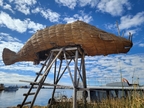
An observation tower shaped like a catfish. The catfish also gives this particular island its name -- Mauri.
20250620_082649.jpg
An observation tower shaped like a catfish. The catfish also gives this particular island its name -- Mauri.
 20250620_083121.jpg
One of the smaller buildings.
20250620_083121.jpg
One of the smaller buildings.
 20250620_083125.jpg
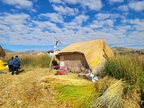
And a house. The inhabitants know they're putting on a show for the tourists, but it still felt like it would be weird to just take picture's of somebody's studio apartment. So, exterior only.
20250620_083125.jpg
And a house. The inhabitants know they're putting on a show for the tourists, but it still felt like it would be weird to just take picture's of somebody's studio apartment. So, exterior only.
 20250620_083226.jpg
Pumas.
20250620_083226.jpg
Pumas.
 20250620_084350.jpg
Up on the catfish tower, a better view of the island and also the type of boats they've been using since their ancestors migrated out onto the lake. Modified a bit for the tourists. Basically, two boats are made into a kind of catamaran with a cabin in the middle.
20250620_084350.jpg
Up on the catfish tower, a better view of the island and also the type of boats they've been using since their ancestors migrated out onto the lake. Modified a bit for the tourists. Basically, two boats are made into a kind of catamaran with a cabin in the middle.
 20250620_084409.jpg
The neighboring island. Who gets visitors is done in turns, so everybody has a chance to get some of that tourist cash.
20250620_084409.jpg
The neighboring island. Who gets visitors is done in turns, so everybody has a chance to get some of that tourist cash.
 20250620_084412.jpg
The reeds between Mauri and the next island. Since they're used as the platform the reeds need to be constantly replenished.
20250620_084412.jpg
The reeds between Mauri and the next island. Since they're used as the platform the reeds need to be constantly replenished.
 20250620_084416.jpg
The island we were on, and different neighbors.
20250620_084416.jpg
The island we were on, and different neighbors.
 20250620_093549.jpg
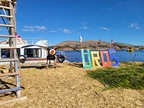
Just in case you forgot you were in Uros.
20250620_093549.jpg
Just in case you forgot you were in Uros.
 20250620_093559.jpg
Condor.
20250620_093559.jpg
Condor.
 20250620_113045.jpg
From there it was about two hours to Taquile, where we started by watching the Indigenous population show off their moves.
20250620_113045.jpg
From there it was about two hours to Taquile, where we started by watching the Indigenous population show off their moves.
 20250620_113052.jpg
More.
20250620_113052.jpg
More.
 20250620_114625.jpg
Another member of the group and I decided to 100% the island and hiked all the way up the ridge to walk to lunch. The sensible people walked along the side of the hill.
20250620_114625.jpg
Another member of the group and I decided to 100% the island and hiked all the way up the ridge to walk to lunch. The sensible people walked along the side of the hill.
 20250620_114903.jpg
Looking toward the top. The people on the island are in charge of maintaining the path and they do a good job of it.
20250620_114903.jpg
Looking toward the top. The people on the island are in charge of maintaining the path and they do a good job of it.
 20250620_124958.jpg
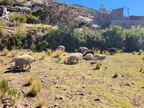
Sheep.
20250620_124958.jpg
Sheep.
 20250620_115256.jpg
Almost to the top. From here we can see Bolivia on the far shore.
20250620_115256.jpg
Almost to the top. From here we can see Bolivia on the far shore.
 20250620_125402.jpg
Burial/memorial marker, I think?
20250620_125402.jpg
Burial/memorial marker, I think?
 20250620_115500.jpg
Selfie from the top, with the hat I'd bought a few minutes earlier. Kept the sun off my head.
20250620_115500.jpg
Selfie from the top, with the hat I'd bought a few minutes earlier. Kept the sun off my head.
 20250620_115647.jpg
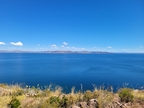
Looking back towards Peru.
20250620_115647.jpg
Looking back towards Peru.
 20250620_131449.jpg
The people who work on the paths sometimes take credit for their efforts.
20250620_131449.jpg
The people who work on the paths sometimes take credit for their efforts.
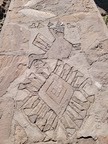 20250620_132054.jpg
Some of the walkway stones had pictures carved into them. This one was a condor.
20250620_132054.jpg
Some of the walkway stones had pictures carved into them. This one was a condor.
 20250620_132132.jpg
Fish.
20250620_132132.jpg
Fish.
 20250620_132203.jpg
Not entirely sure what this one was.
20250620_132203.jpg
Not entirely sure what this one was.
 20250620_165446.jpg
A lucky bull at the hotel, walking to the restaurant.
20250620_165446.jpg
A lucky bull at the hotel, walking to the restaurant.
The only thing to do now was get a good night's sleep and head home.
Flight Home, Day 11: June 21, 2025
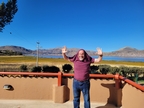 20250621_084312.jpg
I was at Lake Titicaca. Of course I did a Cornholio before I left.
20250621_084312.jpg
I was at Lake Titicaca. Of course I did a Cornholio before I left.
 20250621_131129.jpg
Snow-capped peaks in the distance as we flew back from Juliaca to Lima.
20250621_131129.jpg
Snow-capped peaks in the distance as we flew back from Juliaca to Lima.
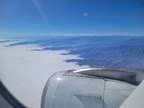 20250621_140251.jpg
Getting to the edge of the mountains now. Not sure if that counts as clouds or fog. After that we landed in Lima and I put the phone away for the rest of the trip. We got to Bogota after dark for our final transfer and didn't land at Dulles until 5:00 the next morning.
20250621_140251.jpg
Getting to the edge of the mountains now. Not sure if that counts as clouds or fog. After that we landed in Lima and I put the phone away for the rest of the trip. We got to Bogota after dark for our final transfer and didn't land at Dulles until 5:00 the next morning.
That's all, folks!
I absolutely recommend going, and doing it in our summer/their winter when the weather there is much nicer.